


Türkiye and Canada Enter a New Phase in Nuclear Energy Cooperation
Türkiye and Canada have entered a new phase in their nuclear energy cooperation. Türkiye Nuclear Energy Corporation (TÜNAŞ), which is responsible for developing nuclear power plant projects in Türkiye, signed an agreement with Candu Energy Inc., a subsidiary of Canada’s AtkinsRéalis. Under the agreement, the two companies will carry out feasibility and front-end engineering design studies for CANDU reactor technology.
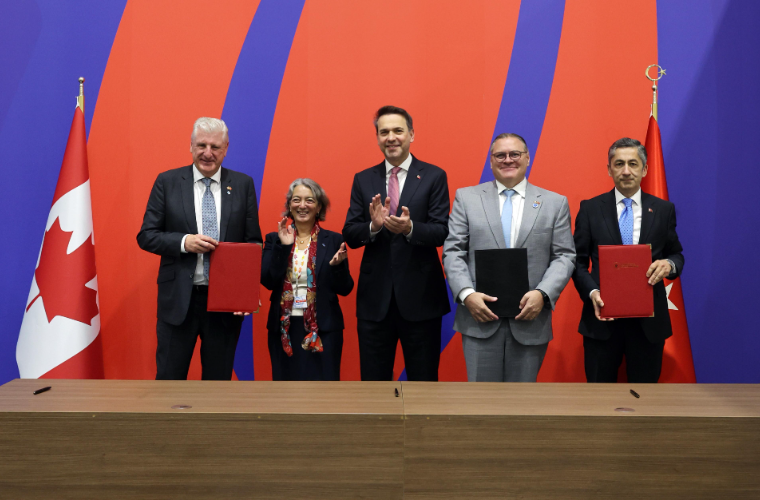

Commenting on the agreement, Energy and Natural Resources Minister Alparslan Bayraktar said, “This process, which covers feasibility and front-end engineering design, will advance the project’s technical and commercial development and provide a sound basis for our final investment decisions. I hope this step, which will help define our long-term nuclear energy roadmap and strengthen our security of supply, will benefit both our countries.”
Pre-Feasibility Study Nears Completion
The two companies signed a Memorandum of Understanding on Nuclear Energy Cooperation during Minister Bayraktar’s visit to Canada in early March. As the pre-feasibility study launched under that memorandum nears completion, the companies reached a new agreement at the 31st Conference of the Parties to the United Nations Framework Convention on Climate Change (COP31), now under way in Antalya.
Agreement Signed in the Presence of Ministers Bayraktar and Dabrusin
The CANDU Feasibility and Front-End Engineering Design Memorandum of Agreement was signed by TÜNAŞ General Manager Necati Yamaç and AtkinsRéalis President of Nuclear Joe St. Julian in the presence of Türkiye’s Minister of Energy and Natural Resources Alparslan Bayraktar and Canada’s Minister of Environment, Climate Change and Nature Julie Dabrusin. AtkinsRéalis President and CEO Ian L. Edwards witnessed the signing.
Feasibility Study
The new agreement covers the next phase of work following the pre-feasibility study, with feasibility and front-end engineering design focused specifically on CANDU reactor technology. The first step will be to assess the feasibility of a potential nuclear power plant project in Türkiye. The study will examine technical matters such as site selection, adapting CANDU reactor technology to the site, and plant operations. It will also assess the project’s financing and economics.
Domestic Industry and Workforce Development
Another major component of the agreement is involving Türkiye’s domestic industry in the project and developing the skilled workforce it will require. The work will include plans for localization and workforce development, as well as project organization, the implementation schedule, cost estimates, and risk assessments.
Laying the Groundwork for Investment Decisions
The agreement aims to advance the project’s technical and commercial development through a more detailed assessment spanning feasibility and front-end engineering design. The work will generate reliable data to inform potential investment decisions and establish a roadmap for subsequent phases of the project.
Defining Türkiye’s Long-Term Nuclear Energy Roadmap
In a statement on social media, Minister Bayraktar said the signing ceremony at COP31 in Antalya, attended by Canada’s Minister of Environment, Climate Change and Nature Julie Dabrusin, marked a concrete step forward in Türkiye and Canada’s strong nuclear energy cooperation.
“With the CANDU Feasibility and Front-End Engineering Design Memorandum of Agreement signed between TÜNAŞ and AtkinsRéalis subsidiary Candu Energy Inc., we are moving into a comprehensive feasibility and front-end engineering design (FEED) phase focused specifically on CANDU reactor technology.
“This will allow us to assess in detail the site selection, adaptation of the technology, operating procedures, and financing of the new nuclear power plant project to be developed in Türkiye.
“Our foremost priorities are to maximize the participation of our domestic industry and develop a skilled workforce. We will draw up comprehensive localization and training plans and carry out detailed work on project organization, the implementation schedule, cost estimates, and risk analyses.
“This process, which covers feasibility and front-end engineering design, will advance the project’s technical and commercial development and provide a sound basis for our final investment decisions. I hope this step, which will help define our long-term nuclear energy roadmap and strengthen our security of supply, will benefit both our countries.”
CANDU Cooperation Discussed During the Ankara Visit
Minister Bayraktar met with Canada’s Minister of Energy and Natural Resources Tim Hodgson during Canadian Prime Minister Mark Carney’s visit to Ankara on 22 October. In a social media statement following the meeting, Minister Bayraktar said, “We focused on assessing whether Canada’s CANDU reactor technology could be deployed in Türkiye and on developing technical cooperation in this area.”
Türkiye and the People’s Republic of China Sign Agreement Envisaging Approximately USD 15 Billion in Investment
On the sidelines of COP31, Türkiye’s Ministry of Energy and Natural Resources and the National Energy Administration of the People’s Republic of China signed a Memorandum of Understanding on Cooperation in Renewable Energy in the presence of Türkiye’s Minister of Energy and Natural Resources, Alparslan Bayraktar.
Approximately USD 15 Billion in Investment
In a statement on social media, Minister Bayraktar said, “The agreement envisages approximately USD 15 billion in investment in Türkiye. Under the agreement, we aim to develop a combined 7,000 MW of solar and wind power capacity, new energy storage systems, and 4,000 MW of electricity transmission capacity.”
A Significant Contribution to Domestic Industry
Minister Bayraktar said the cooperation would expand Türkiye’s renewable energy capacity and added, “It will also enable technology transfer, support the production of wind turbine equipment in Türkiye, and make a significant contribution to the development of our domestic industry. In line with our National Energy 2040 Vision, this historic agreement will strengthen our energy security and accelerate our green transition. I hope it will benefit both our countries.”